
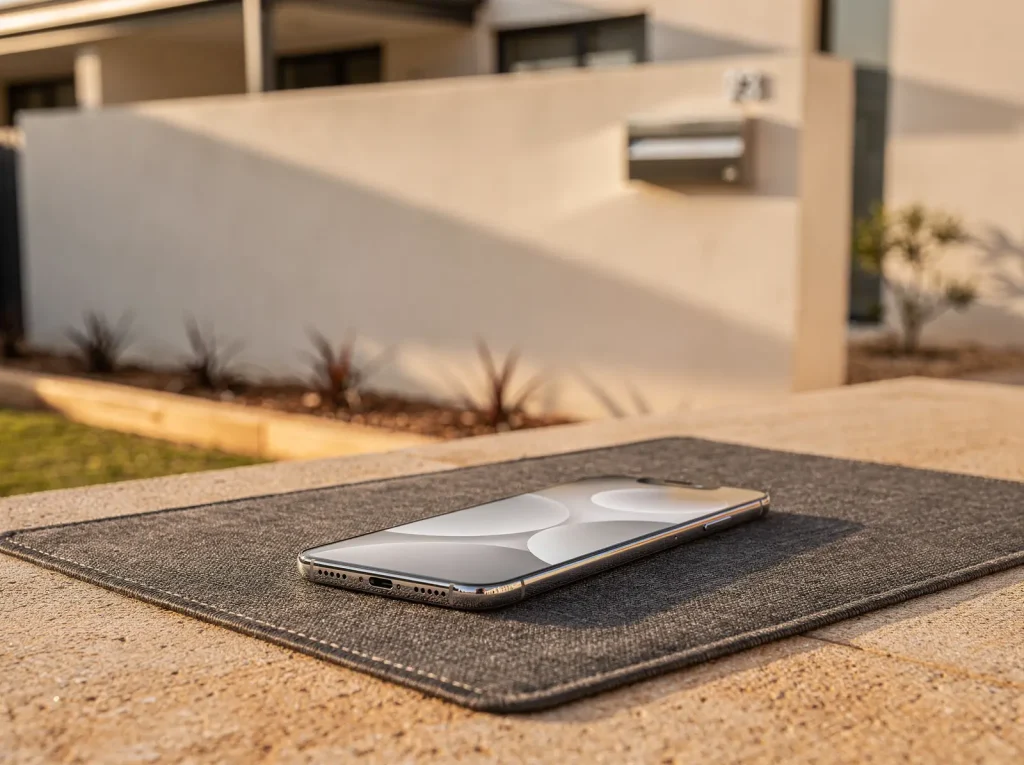
Picture your phone sitting face-up on the car dashboard while you duck into a shop in Joondalup on a 40-degree February afternoon. Or buried in a beach bag at Cottesloe, coated in fine sand and a film of sunscreen. Scenarios like these drive a surprising share of the faults handled by local mobile phone repairs specialists, and most of them are entirely preventable once you understand what our climate does to a device.
Standard phone-care advice assumes a mild, temperate environment. Perth is a different story. Intense UV, extreme dashboard heat, coastal salt air, beach sand, and pool chlorine each attack phones in their own way. Knowing how helps you protect yours.
How Extreme Heat Damages Batteries and Internal Components
Lithium-ion batteries hate heat. Every phone has a safe operating range, and a Perth summer routinely pushes past it. A car interior can hit 60 to 80 degrees when parked in the sun, well beyond anything a phone is designed to endure.
Sustained high temperatures accelerate chemical wear inside the battery. That means reduced capacity, faster drain, and swelling in severe cases. Heat also stresses the processor, display, and adhesives that hold the device together. Once that damage accumulates, it doesn’t reverse.
The dashboard is the worst offender. Direct sun through the windscreen turns your phone into a small oven, and the effects add up over a single summer of school runs and shopping trips.
The Hidden Threat of UV Exposure
Perth records some of the highest UV levels of any capital city in Australia. That radiation does more than heat a device.
Prolonged UV exposure can degrade the adhesives sealing your screen and back panel, weakening the barrier that keeps dust and moisture out. It can also affect certain display components and yellow the plastics on cases and ports over time. A phone that spends its days on a pool lounger or a boat deck ages faster than one kept in a bag or pocket.
Coastal Living, Salt Air, and Corrosion
If you live in Fremantle, Scarborough, Hillarys, or anywhere along the coast, salt is a constant companion. Airborne salt settles on everything, including the inside of your phone through charging ports, speaker grilles, and seams.
Salt combined with humidity is corrosive. Over months it can eat away at metal contacts and internal connectors, leading to intermittent charging, distorted audio, or a port that no longer holds a cable properly. These problems build slowly, so many people don’t connect the fault to their coastal address.
Humidity alone plays a role too. Moisture in the air can condense inside a device that moves between air-conditioned interiors and hot outdoor conditions, encouraging the same corrosion over time.
Beach and Pool Hazards
A day at the beach or by the pool exposes a phone to several threats at once:
- Sand is abrasive and fine enough to work into buttons, speakers, and charging ports, where it grinds against moving parts and blocks connections.
- Sunscreen residue transfers from hands to screens and ports, attracting grit and leaving a sticky film that interferes with touch response.
- Water exposure from splashes, dropped devices, or a phone slipped into a wet swimsuit pocket. Even water-resistant phones lose their sealing as they age, especially once heat and UV have weakened the adhesives.
- Pool chlorine is harsher than fresh water and can leave residue that contributes to corrosion if a phone takes a dip.
Everyday Habits That Reduce Climate Wear
Small changes make a real difference over a Perth summer. Consider building these into your routine:
- Never leave your phone on the dashboard or seat of a parked car. Take it with you or stow it in a cooler spot like the boot in shade.
- Keep it out of direct sun when you’re outdoors for long stretches, whether at the beach, the cricket, or a backyard barbecue.
- Avoid charging a phone that’s already hot. Let it cool to room temperature first.
- Wipe down ports and grilles after coastal days, and keep the phone in a bag rather than a pocket when you’re near the water.
- Rinse your hands of sunscreen before handling your device at the beach or pool.
- Move a phone gradually between very cold air conditioning and hot outdoor air where you can, to limit condensation.
Warning Signs Your Phone Is Already Struggling
Climate stress often shows itself before a total failure. Watch for these signals:
- The battery drains far quicker than it used to, or the phone shuts down in the heat.
- A swollen back panel or a screen that lifts at the edges, which can point to a failing battery.
- Charging that only works at certain cable angles, or a port that feels loose.
- Muffled or crackling speaker and microphone audio.
- Fogging or water marks visible under the screen or camera lens.
- Sluggish performance or unexpected restarts on hot days.
Any of these deserve attention early. Addressing a problem while it’s minor is almost always easier than waiting until the device fails completely.
Smart habits go a long way, but they can only do so much when your phone lives in one of the harshest environments in the country. The single most effective barrier between your device and Perth’s sun, salt, and sand is what you wrap around it every single day, which makes choosing the right protective gear for local conditions the natural next thing worth understanding.